
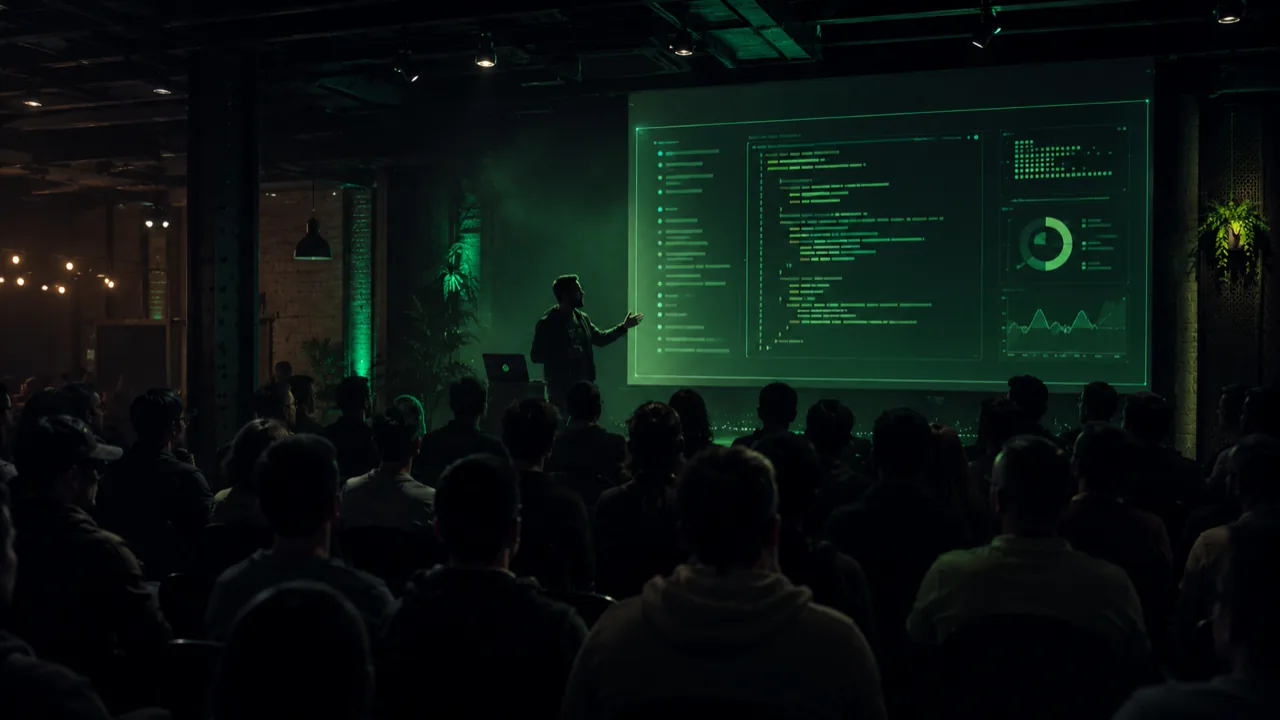
I've lost count of the meetups. A decade of folding chairs in office canteens, lukewarm pizza, lightning talks that ran long, and that particular hum of a room full of people who'd rather be coding but came out anyway. Somewhere in those years — between the name badges and the awkward networking — I picked up a handful of stubborn opinions about how software actually gets shipped. Not from the talks, mostly. From the conversations afterward.
Here's what stuck, distilled from a hundred hallway chats with people building real things under real constraints.
Everyone's stack is messier than their talk
The talks are polished. The architecture diagrams are clean, the demos work, the speaker sounds like they've got it all figured out. Then you corner them by the drinks table and the truth comes out: the migration is half-finished, there's a cron job nobody understands holding production together, and the elegant system they presented has a giant ugly exception they didn't mention. Every single time.
This was oddly liberating to learn. Early on I assumed everyone else's codebase was pristine and mine was uniquely cursed. Ten years of off-the-record confessions taught me the opposite: shipping software is inherently messy, and the people who ship the most carry the most mess. The polished talk is the highlight reel. The real work, everywhere, is duct tape and judgment calls.
Shipping beats perfecting, nearly always
The teams I watched succeed over those years had one trait in common, and it wasn't talent. It was a bias toward shipping. They got something real in front of users early, learned from it, and iterated, while the perfectionists were still arguing about the right abstraction for a problem they didn't yet understand. The shippers were often a little embarrassed by their first version. They were also the ones still around to build the tenth.
I watched genuinely brilliant people sink months into beautiful systems for products that never launched, because launching felt risky and polishing felt safe. It isn't. Unshipped work teaches you nothing. The market, the users, the production load — those are the only honest teachers, and you don't get to meet them until you ship.
The community is the real documentation
The most practical thing meetups gave me wasn't knowledge — it was people. When I hit a wall with a database I'd never run in anger, I didn't read a manual. I messaged someone I'd met at a meetup who ran it at scale, and got an honest "don't do that, here's why" in ten minutes. That informal network of people who'll tell you the truth is worth more than any course.
This is the part that doesn't show up in a conference schedule. The value of showing up regularly isn't any single talk; it's that over years you build a web of people whose judgment you trust and who trust yours. When something breaks at 2am, the difference between a long night and a short one is often just knowing whom to ask.
So I keep going, even now, even tired, even when the talk doesn't grab me. Because the room is the point. Ten years in, my strongest opinion about shipping is that it's a team sport played across a whole community, and the folding chairs and lukewarm pizza are where that community quietly gets built, one honest hallway conversation at a time.